Yin Xu
Introduction
Yin Xu, also known as the Yin Ruins, is one of the most significant archaeological sites in China, offering a window into the late Shang Dynasty. Located near the Huanhe River in Anyang, Henan province, this site represents the remnants of the ancient city of Yin, considered the first capital site in Chinese history documented and substantiated by archaeological findings. Dating back over 3,000 years, Yin Xu comprises two primary areas: the Palace and Royal Ancestral Shrines and the Royal Tombs. Spanning 414 hectares, with an additional 720 hectares serving as a buffer zone, this site reflects the grandeur of the Shang Dynasty's capital. Yin Xu was officially added to the UNESCO World Heritage List in 2006, recognized for its outstanding universal significance as a testament to the golden age of early Chinese culture, crafts, and sciences.
Historical Background
The Shang Dynasty (c.16th century-11th century BC) is a pivotal era in Chinese history, marked by advancements in metallurgy, art, and a structured society. Yin Xu holds historical importance as the final capital of the Shang Dynasty. It was during the reign of the 20th king, Pan Geng, that the capital was relocated from Yan to Yin around 1300 BC, establishing a long-lasting and stable hub that spanned 255 years under 12 kings and eight generations. This era witnessed the flourishing of the Yin-Shang Civilization, characterized by remarkable achievements in governance, art, and technology.
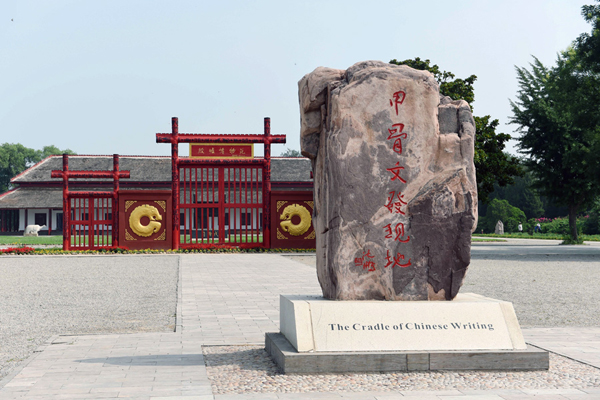
Yin Xu's historical significance is further highlighted by its association with the oracle bone inscriptions, the earliest evidence of Chinese writing. These inscriptions provide a detailed account of the Shang Dynasty's socio-political life, revealing insights into its royal court, religious practices, and daily activities. The site's extensive layout and planned construction influenced the development of subsequent Chinese capitals, laying the groundwork for future urban planning and architectural advancements in ancient China.
Archaeological Discoveries
Excavation Sites
Yin Xu has been the focal point of archaeological interest since its discovery in 1928, marked by continuous excavations that have unearthed a wealth of historical artifacts. The site is divided into the Palace and Royal Ancestral Shrines area and the Royal Tombs area. The Palace area features more than 80 house foundations made of rammed earth, with remnants of timber structures, ancestral shrines, and altars enclosed within a defensive ditch. This ditch also served a dual purpose as a flood-control system. Within this area, numerous pits containing inscribed oracle bones were discovered, representing the earliest known mature form of Chinese writing.
The Royal Tombs area, on the other hand, includes sacrificial pits containing chariots, human remains, and burial goods such as decorated bronze ritual vessels, jade, bone carvings, and ceramics. These findings underscore the site's role as the earliest large-scale royal graveyard in China, providing critical insights into the system of royal and imperial mausoleums that followed in Chinese history.
Significant Artifacts
Among the most significant artifacts found at Yin Xu are the oracle bones, which are crucial for understanding the Shang Dynasty's administration, religious practices, and daily life. These bones, inscribed with divination records, offer a glimpse into the lives of Shang rulers and their subjects. The artifacts also include a range of exquisitely crafted bronze vessels, which highlight the advanced metallurgical techniques of the time. The bronze wares are known for their intricate designs and ceremonial significance, reflecting the Shang people's spiritual beliefs and artistic sensibilities.
The Tomb of Fu Hao, a member of the royal family, is another noteworthy discovery at Yin Xu. This tomb is unique as it remained intact over the centuries, providing a rich collection of burial goods that include bronzes, jades, and bone artifacts. The grave goods found here speak to the wealth and power of Fu Hao, offering a detailed account of the social hierarchy and cultural practices within the Shang Dynasty.
Cultural Significance
Yin Xu is not only a key archaeological site but also a cultural landmark that provides invaluable evidence of the cultural traditions of the Late Shang Period. The remnants at Yin Xu testify to many of the scientific and technical achievements of the time, such as the development of a solar and lunar calendar system, and the evolution of the Chinese written language seen in the oracle bones. These elements highlight the sophisticated level of cultural and intellectual development that characterized the Shang Dynasty.
The site's influence on subsequent Chinese culture is profound, as it set precedents in urban planning, burial customs, and state rituals. The layout and design of Yin Xu's palaces, shrines, and tombs had a lasting impact on the construction and organization of later Chinese capitals. Additionally, the ritualistic use of bronze vessels and the practice of ancestor worship found at Yin Xu have continued to play a significant role in Chinese cultural and religious traditions.
Influence on Chinese Civilization
The influence of Yin Xu on Chinese civilization is extensive, providing a foundation for understanding ancient Chinese governance, religion, and social structure. The site offers insights into the early forms of governance that shaped the political landscape of ancient China. Its discoveries have helped scholars trace Chinese history nearly 1,000 years earlier than previously documented, shedding light on the origins of Chinese civilization.
The technological advancements demonstrated by the artifacts at Yin Xu, such as bronze casting and the oracle bone script, have had a lasting impact on Chinese society. These innovations facilitated the development of a written language that became integral to Chinese culture and administration. Furthermore, the scientific achievements related to the calendar system and metallurgy found at Yin Xu have influenced subsequent technological progress in China.








